
B*****ds!
A hundred years since The Legitimacy Act 1926

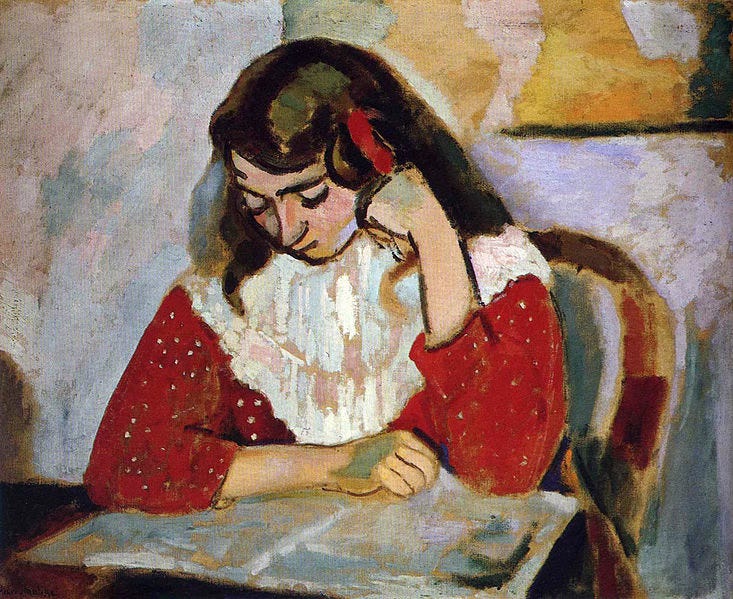
Henri Matisse, Portrait de Marguerite (The Reader), 1906, Musée de Grenoble. Marguerite was Matisse’s illegitimate daughter with his model Caroline Joblau.
A note before we start. The word ‘bastard’ was in common legal use until the early 20th century and I have used it in that context. According to my OED it originated from the Old French ‘fils de bast’ - ‘the child of a pack saddle’, so by implication a child fathered by a passing or unknown father.
My first husband’s grandmother Lilian was born in 1877, the illegitimate daughter of a well to do Cambridge solicitor. At only a few days old, she was farmed out to a couple in the West Riding and even after her parents married - very soon after her birth, she was never acknowledged. If she had been born after 1926, that subsequent marriage would have legitimised her. Sadly the shame of her too-early arrival meant she never met her mother and father.
Fifty years after Lilian’s birth, the pressure to legitimise children whose parents subsequently married became overwhelming. The Legitimacy Act of 1926 was passed after no less than 12 private member's bills on the subject and eventually Stanley Baldwin’s Conservative Government acknowledged the support for a legal change. There was still opposition though, as we shall see.
Over the years the law has thrown up various ways of dealing with the consequences of extra-marital liaisons. There was an attempt as early as 1236 to make English Common Law conform to Canon Law, which even then held that subsequent marriage legitimised before-born children. A hundred and one years ago today, here’s what Hansard (Vol 60 12 March 1925) says about that early attempt.
The Bishops pressed for an alteration of the English law so as to bring it into conformity with the canon law, the assembled Earls and Barons replied that they would not change the law of the realm, which had been hitherto used and accustomed, and they used the expression often heard since, ‘nolumus leges Angliæmutari’.
It was of course all about money and title. In feudal times if you were not born into the land holding class it was actually better to be illegitimate. The children of serfs were serfs but the child of an unmarried woman was a filius nullus - the son of no one -and thus a free man. You did have to get a certificate from a Bishop to confirm the fact but nonetheless.
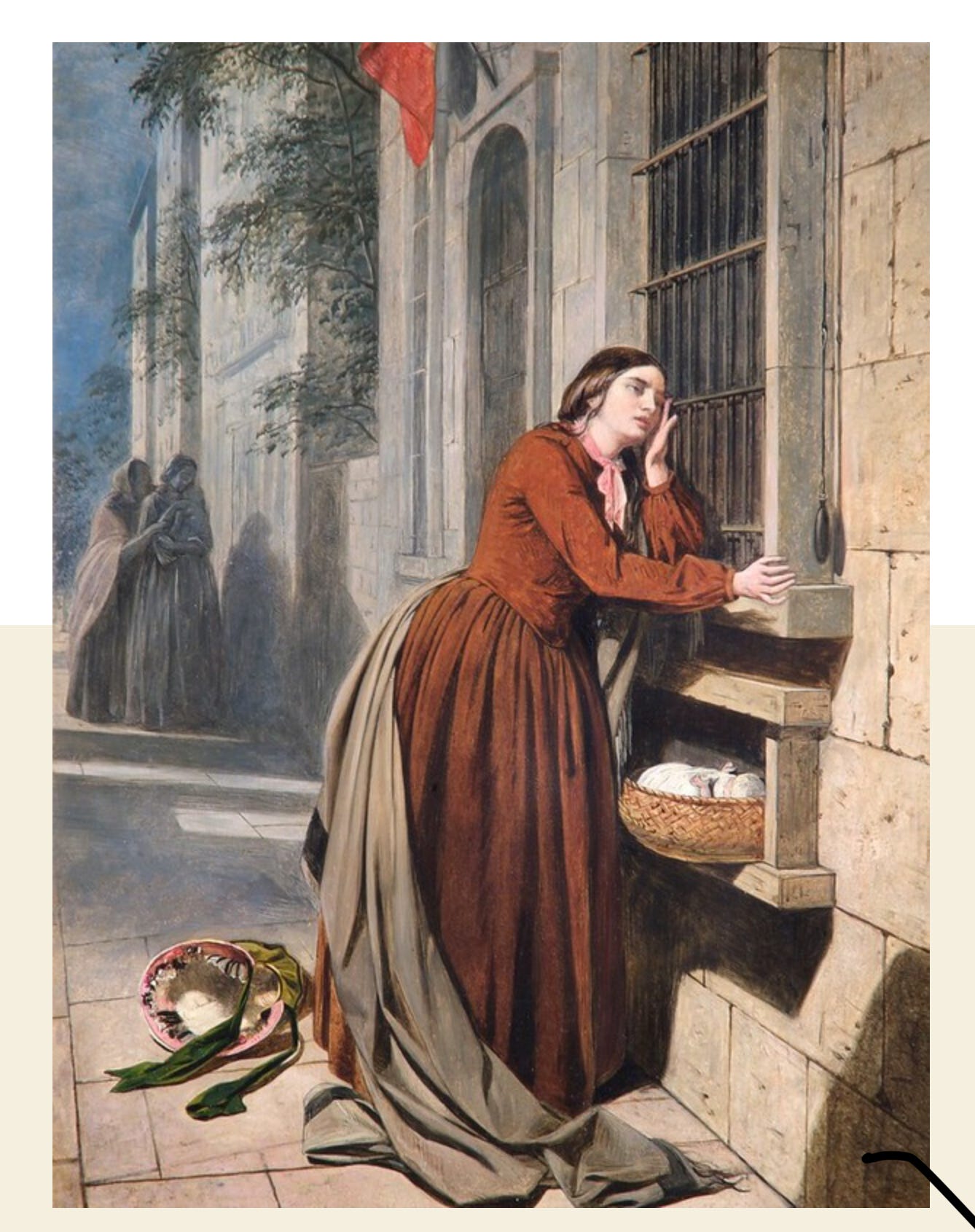
A Mother depositing her child at a Foundling Hospital. Henry Nelson O’Neil (1817-1880)
The Mediaeval Laws of Wales took a different view. In Welsh law, a bastard was an ‘unacknowledged’ child. As long as you were recognised by your father as his, you could inherit from him - whether or not he was married to your mother when you were born. Any one who has read the delightful Brother Cadfael stories by Ellis Peters will already know that. The humane and pragmatic Welsh way was gradually replaced by harsher English rules after the death of Prince Llewellyn in 1282.
The Bastardy Act of 1575 compelled a woman to disclose the father of her illegitimate child to the parish overseer or the local magistrate. The law then presented the father with the choice of supporting her, marrying her or going to prison - a situation which prevailed until The Poor Law Amendment Act of 1834. The obvious defence for a man in such circumstances was to disclaim all responsibility and suggest there might be other putative fathers.
Under the 1733 Bastardy Act, the mother herself could be imprisoned if she refused to disclose the father of her child. One Sarah Mason of Bayford in Hertfordshire was committed to gaol in 1741 until she discloses the name of the father of her bastard child.
The law was draconian not from any reason of moral probity but because an unsupported child might become a burden on the parish. In that way the Poor Law functioned as the main regulator of illegitimacy. If a father could be identified, then he would be forced by the local community to pay for the lying-in and the maintenance of his child. That’s what is meant by a ‘Bastardy Bond’. Non payment meant gaol but it was easy to move parish to avoid it, and it is estimated about 40% of bonds were unpaid.
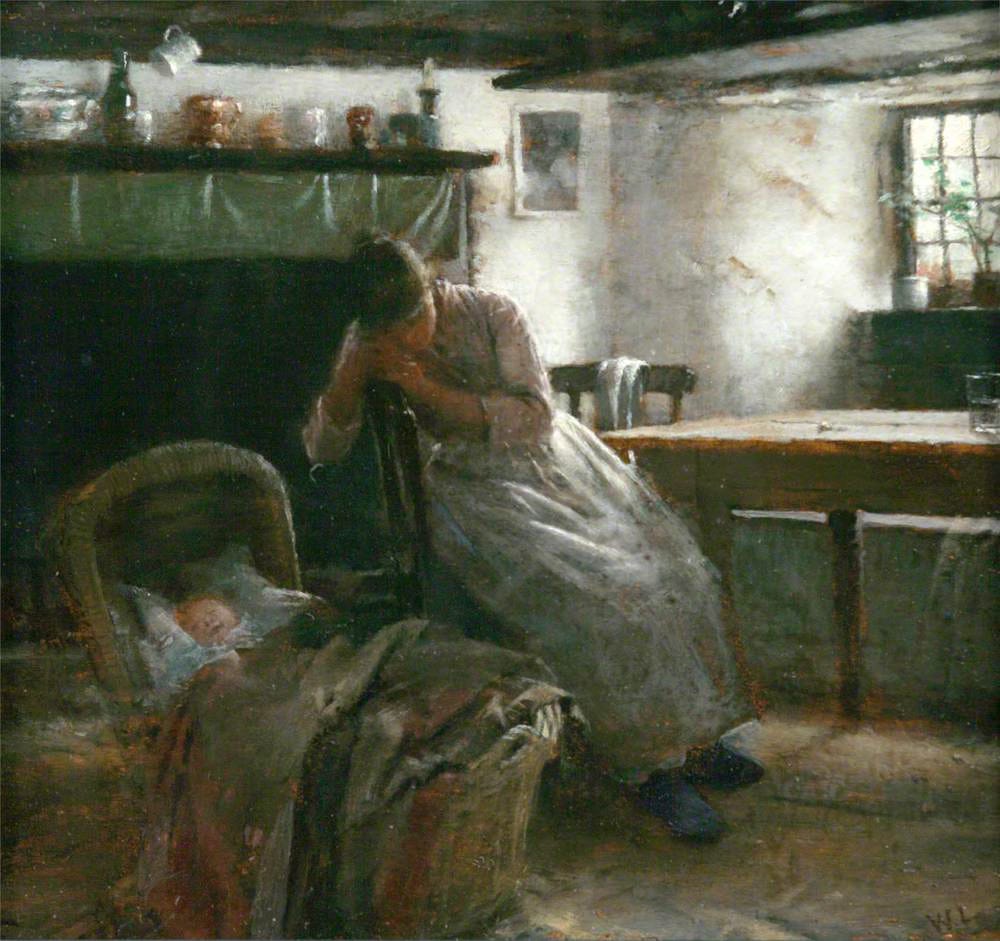
‘Daydreams’ by Walter Langley (1852-1922) Penlee House Gallery Penzance
Of course if you had money, then the situation was different. The famous actress Dorothea Jordon bore ten illegitimate children to the Duke of Clarence, the third son of King George III. She was given the huge allowance of £4,400 provided she did not return to the stage. The Duke took the boys to live with him and Mrs Jordon was allowed to bring up her daughters.
Parish records tell us that the low point for illegitimate births was 1650 (less than 1%) then the rate rose steadily to about 7% in 1850. In early Victorian England roughly a third of women in England were pregnant when they married. It was also very common to have any ‘natural’ children baptised in a parish that was not your own. A couple of sovereigns to the parish clerk would ensure that no questions were asked. Across the River Hayle from where I live, in the early 19th century, Henry Harvey, who owned the engineering works that made pumping equipment for tin mines, had his numerous illegitimate children baptised in the neighbouring parish of St Erth. The mother was his house maid, they were both single and clearly the liaison went on for years but he never married her.
In this extract from a blog post for ‘The Cambridge Group of the History of Population and Social Structure’, Alice Reid writes about the common perception of illegitimate children and their mothers in literature.
Literature depicts unmarried mothers e.g. Thomas Hardy’s Tess of the D’Urbervilles, and their children e.g. Charles Dicken’s Oliver Twist, as supremely disadvantaged: cast out from society, malnourished, excluded from work, forced into the awful clutches of the workhouse and doomed to early deaths. The children of unmarried mothers; Hetty in George Eliot’s Adam Bede, Fanny in Thomas Hardy’s Far From the Madding Crowd, and Tess in Hardy’s eponymous novel all died within days of their birth.
One notable exception is Mary Thorne in Trollope’s ‘Dr Thorne’. Mary grows up refined and beautiful, although her mother is forced to give her up and emigrate. To the righteous Victorian mind, the mere presence of someone born out of wedlock was a threat to the social order. Such a child was a living reminder of sin and so to be illegitimate was to be tainted from the cradle. Trollope points the finger at such hypocrisy by eventually making Mary a wealthy heiress when suddenly all objections to her birth and background miraculously evaporate.
Natural children abound in literature - there’s enough for another post about it - Esther Summerson in ‘Bleak House’ is another young woman whose upright standards are at odds with her so-called ‘base’ birth. (Her mother, Lady Dedlock dies - and I’ve always found her fate terribly upsetting.)
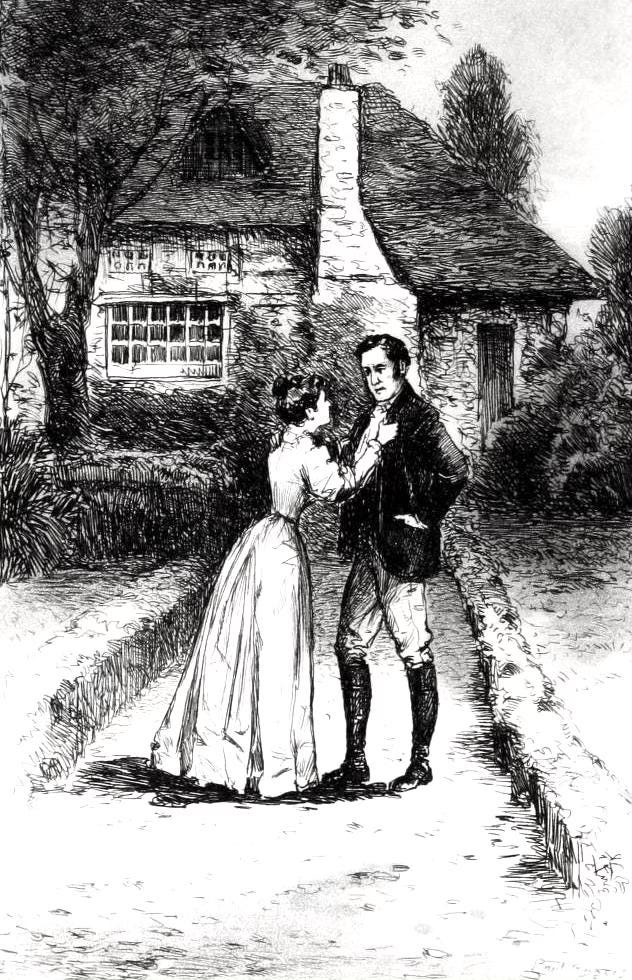
Dearest uncle, do you not know that you are not answering me fairly?” Mary pleading with Dr Thorne to tell her about her origins. Paul Roger’s frontispiece to the Gebbie Edition.
The law on illegitimacy has transformed in the last sixty years. I remember writing an essay at university in the seventies, when we were invited to “Discuss the legal incidence of being born a bastard “ - the Family Law Reform Act of 1969 having fairly recently removed the prohibition on illegitimate children inheriting on an intestacy.
Under pressure from the Archbishop of Canterbury, one of the exceptions in the 1926 Legitimacy Act was where one parent of the child was married to someone else at the time of birth. Sir Charles Oman, the historian, who was then a Member of Parliament for Oxford University, went so far as to say that if an exception for already married parents was not made “it would be an incentive to a man to commit the murder of his wife in order that he might marry his mistress.”
There was also a seriously expressed concern that a wife might come under pressure to divorce her husband if he had fathered an illegitimate child and wanted to marry that child’s mother. The subtext of that being of course that the illegitimate child might be a son and the existing wife might be childless or have only given birth to daughters.
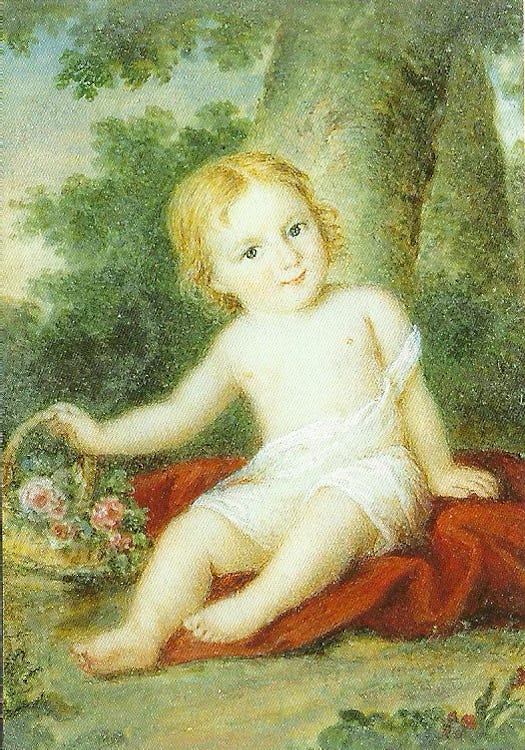
Clara Allegra Byron (1817-1822) illegitimate daughter of Lord Byron and Claire Clairmont
The Legitimacy Act of 1959 set things right. A contemporary report by The British Medical Association stated It is not yet universally recognised that whatever the guilt of the parents of the illegitimate child, no moral blame can rest on the child itself. However, even in 1959, there were still a handful of MPs who voted against the Bill because they believed it was yet another blow to the sanctity of marriage and any relaxation would sanction immoral behaviour.
The 2021 figures from The Office for National Statistics show that 51% of children are now born to mothers who are not married, although nearly 40% are cohabiting. There was a bit of a to-do when it was discovered that the former Archbishop of Canterbury was the illegitimate son of Sir Anthony Montague Browne. The rules against illegitimate persons serving as clerics had been removed in the 1960s, otherwise Justin Welby would have had to ask himself for special dispensation.
Illegitimacy was a legal category until 1987 when the last vestige of differentiation was removed. My guilty pleasure watching ‘Long Lost Family’ though does show that sometimes all is not quite forgiven or forgotten. The Irish Mother and Baby Home scandal is very much within living memory and not all cultures take the liberal view. However like so much social change in my lifetime, we are kinder and more inclusive than we used to be. Let’s hope it stays that way.
There is a coda to Lilian’s story. At the end of the First World War she was deserted by her husband. He ran off with someone who was always referred to in the family as “The Woman from Leicester”. She was left destitute with two small children, so she wrote to her birth father. A few days later her parents’ legitimate daughter - her full sister, visited her to check out her circumstances and £1000 was placed in her bank account. Not a small sum in 1919. She used it to buy a lodging house which she kept until she retired at the beginning of WW2. Then she lived on until she was 98, loved and revered until the end.
‘The Gentle Art of Cookery’ by Mrs C.F. Leyell and Miss Olga Hartley was published in 1925. It’s a delight. This is from the chapter called ‘The Arabian Nights’. I give it to you exactly as the book says. I’ve made loads of versions of this over the years.
Munkaczina
An Eastern Hors d’Oeuvre brought from the East by Anatole France.
Take one or more oranges and cut them in slices crossways. Peel the slices and remove the pips and white in the middle of the round.
Arrange a bed of slices of orange at the bottom of the dish, and cover with finely chopped onion. On the onion place a bed of stoned black olives and sprinkle them with red pepper, salt and olive oil.

I’m away next week, so more in a couple of weeks.
x Liz
Thank you to my old friend Aldyth for telling me this morning the Welsh term for an illegitimate baby - it's 'plentyn siawns' - a chance child.
I was born at the end of WW2. Wars tend to produce unwanted children, and I was one. I was relatively lucky to be adopted rather than shipped out to an unknown fate in Australia. The stigma was certainly alive in my childhood, if unspoken.