
The Isokon Set
or what connects Barbara Hepworth and The Clangers?

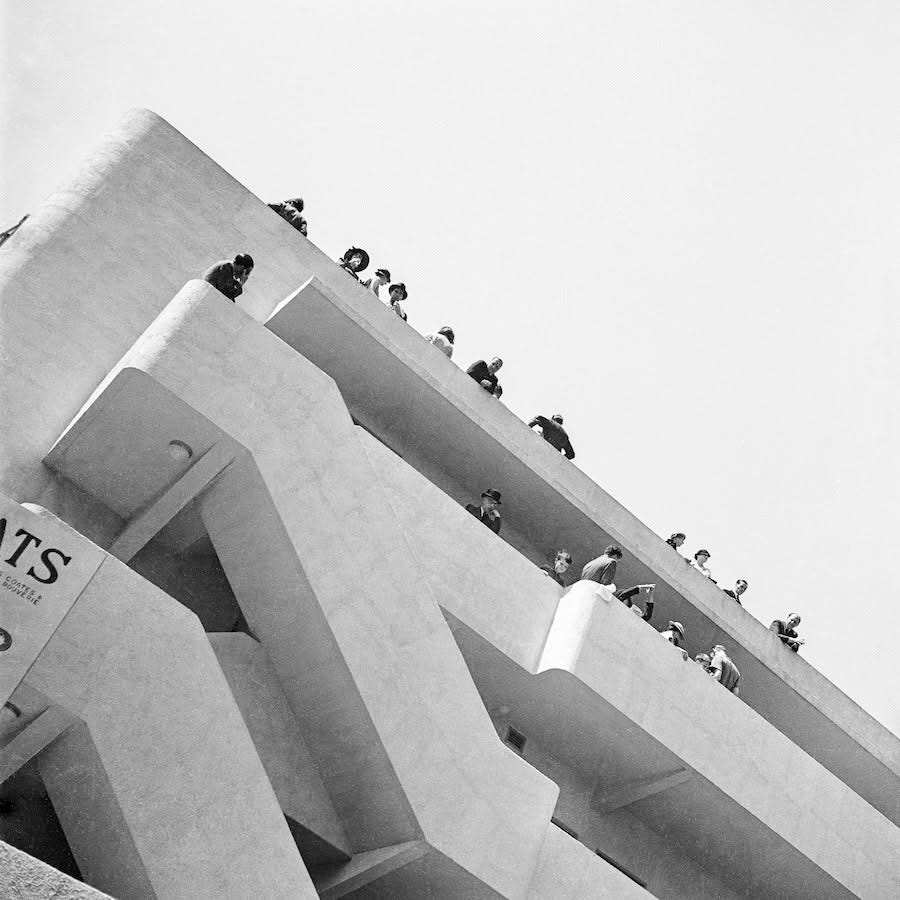
The Isokon Building in 1934 photograph by Edith Tudor-Hart (see below)
I love the ‘Degrees of Separation’ game. It appeals to my psyche - the idea that we are all connected in someway and any two of us are only six degrees of separation away from each other. I find that a comfort. When I was musing a couple of weeks ago about my lifelong love of making food for other people, the chef Philip Harben got a mention for writing a book called ‘The Grammar of Cookery’. Before and after the Second World War, Harben was the chef at the ‘Isobar’ which opened in 1937. The Isobar was the basement social club at the Isokon Building - then known as the Lawn Road Flats in London’s Belsize Park. The building was inspired by the modernist designs of the Bauhaus and designed by the Canadian architect Wells Coates.
Philip Harben and his friend Raymond Postgate also started something called ‘The Half Hundred Club’ - a ‘poor man’s dining society’ for 25 members and their guests, which was based in the Isokon building. All members were invited to cook, with the proviso the cost should not be more than £1 per head.
Much has been made of the spies who lived in the Isokon but the friendships and artistic connections of the residents are no less fascinating and sometimes the connections between artists and spies overlap.
So let’s make the Isobar our Kevin Bacon, play the degrees of separation game and see where those left wing artistic types who frequented it, can lead us. All the residents of the Isokon Building were able to use the Isobar Club for meals, drinks and social occasions. In addition ‘their friends and residents in Hampstead’ were eligible to join - and many did.
Isokon Residents
The Owners
Jack and Molly Pritchard met at Cambridge in 1920. Molly was studying medicine at Girton, Jack was at Pembroke College reading Engineering and Economics. They were married in 1924 and spent their honeymoon in the tiny village of Leven, East Yorkshire where Molly was a locum GP. Leven is three or four miles from where my Mum had recently been born and where my cousins still live.
In 1929 the Pritchards bought a piece of land on Lawn Road in south east Hampstead near to where Jack had grown up.
The Designer
Wells Coates: Canadian architect who designed the Isokon Building.
Wells Coates was a member of Leonard Woolf’s 1917 Club where he met H.G. Wells, Evelyn Waugh, Aldous Huxley and the Scarborough born actor Charles Laughton. Other members at the time were Raymond Postgate (see below), Rose Macauley and the actress Elsa Lanchester, who was Charles Laughton’s wife and whose house in Gordon Square was redesigned by Coates.
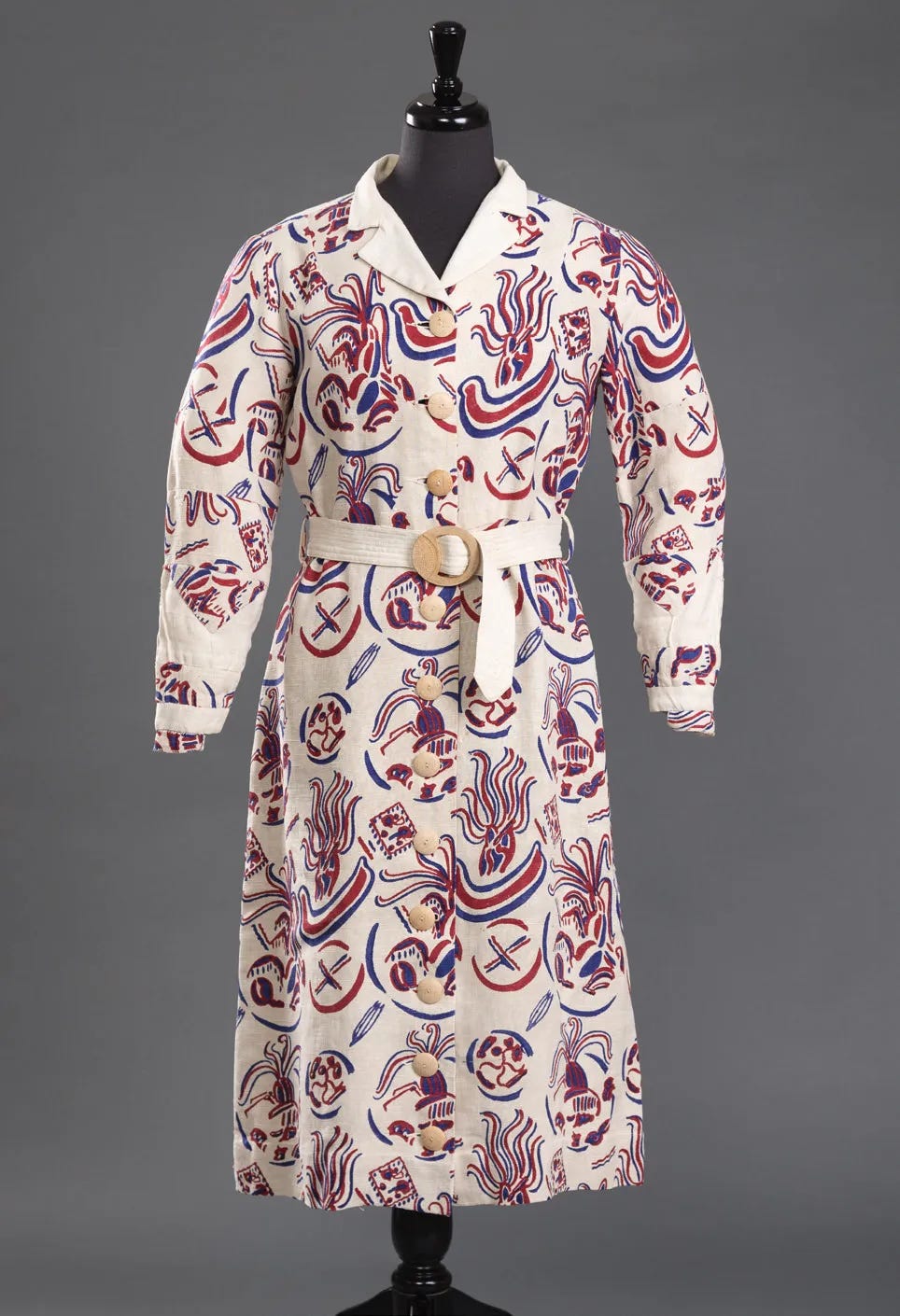
Crysède dress in the design ‘Lobster Supper’
In 1928 Coates met the textile designer Alec Walker and his colleague Tom Heron. Alec Walker owned the Cornish based textile company Crysède and his designs owed much to the personal advice and support of the French artist Raoul Dufy.
Walker invited Wells Coates to design the first Crysède store in Cambridge in 1929. Coates then went on to design the very stylish Cresta Stores opened by Tom Heron after he left Crysède, and through that was invited by the Pritchards to design the Isokon building following a detailed brief drawn up by Molly. The Isokon building was completed in 1934. (There is a lot more to that story including the fact that Molly and Coates became lovers but no space for that here).
Other designers for Cresta included the fourteen year old Patrick Heron, the Cornish born son of Tom Heron and later one for the most significant figures in British 20th century art, Paul Nash (see below), Graham Sutherland and Cedric Morris.
The Inspiration
Walter Gropius founder of the Bauhaus, the inspiration for the Isokon building where he lived from October 1934 until he left to teach at Harvard in March 1937
The Interior Designer
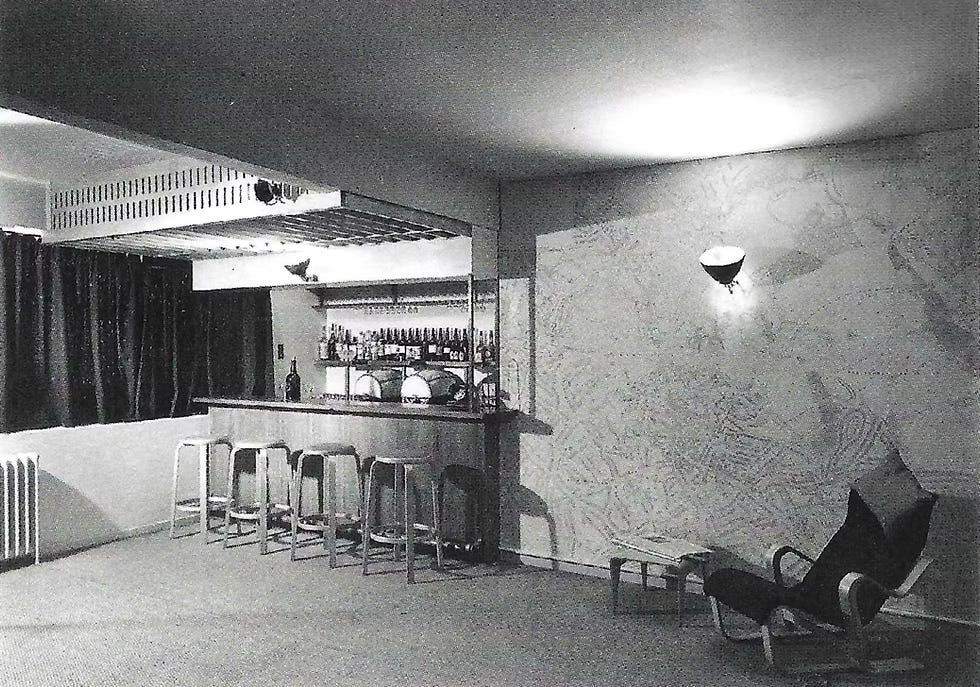
Inside the Isobar - photo probably Edith Tudor-Hart
Marcel Breuer was the architect and designer and member of the Bauhaus who designed the interior of the Isobar. Like Gropius he also left Lawn Road for the US in 1937 - his farewell dinner was in the newly finished Isobar and was made by Philip Harben, the menu was onion soup, a two bird roast and Christmas pudding.
The Chef
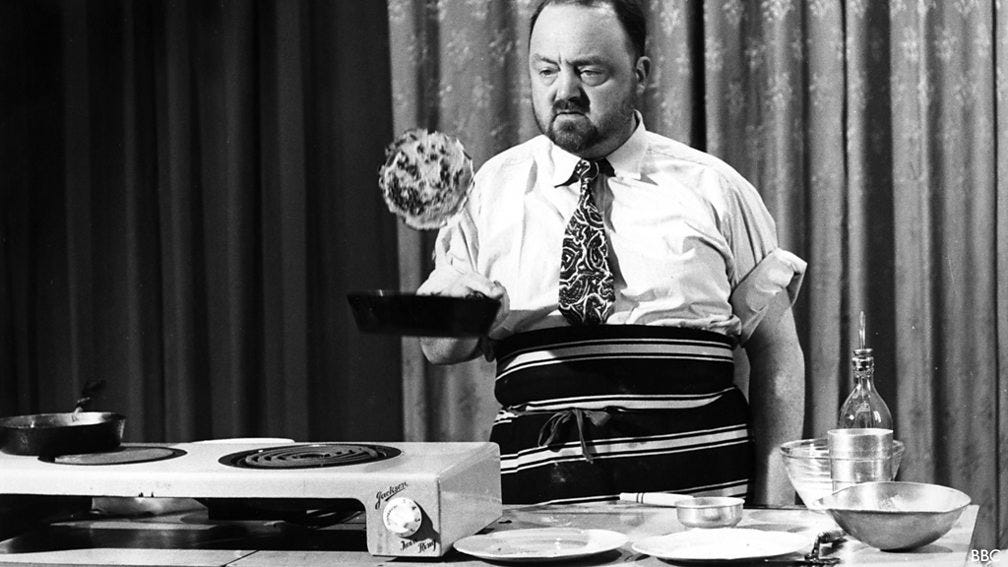
BBC Photo Archives
Philip Harben was a north Londoner from a theatrical family. As a child he spent his time with the family cook who looked after him when his parents were away on tour. He later said “I could scramble eggs and make mayonnaise long before I could read Thucydides or solve a quadratic equation”. He was an enthusiastic proponent of foreign food when much of the British public thought olive oil was something you bought in Boots and put in your ears. Initially Harben was the manager of the Isobar but very quickly he became its chef and his down to earth Lancashire born wife Kathie took over as manager. His left wing politics made him an ideal choice for the members of the Isobar and his enthusiastic support for many of their causes was an integral part of the success of the bar both before and after the war.
Other pre-war residents of the Isokon Building
Nicholas Monsarrat author of ‘The Cruel Sea’ and a contemporary of Anthony Blunt at Trinity College, Cambridge.
Adrian Stokes; painter and art critic. Fundamental to the establishment of the post war St Ives School. Moved to Carbis Bay in the early part of WW2 and invited Ben Nicholson and Barbara Hepworth and their children to live in Cornwall
Agatha Christie (from 1941) when the Isokon, which was made of concrete was described as the safest building in London
Edith Tudor-Hart née Suschitzky photographer who trained at the Bauhaus. Soviet spy - friend and contemporary of fellow photographer Ida Kar who photographed many of the St Ives artists including my old friend Monica Wynter, widow of the artist Bryan Wynter.
Edith met Beatrix Tudor-Hart (see below) in Vienna in the 1920s and married her brother the doctor Alex Tudor-Hart in 1931. Edith was also a close friend of Kim Philby’s wife Litzi and instrumental in recruiting him to spy for the USSR by introducing hime to Arnold Deutsch, another Isokon resident who was her lover and Soviet handler. Antony Blunt said in his confession ‘she was the grandmother of us all’.
By coincidence:
https://spitalfieldslife.com/2026/07/02/edith-tudor-hart-photographer-iii/
Friends and Neighbours of the Isobar and/or members of the ‘Half Hundred Club’
Beatrix Tudor-Hart Jack Pritchards’ lover and a teacher at Beacon Hill the progressive school in West Sussex run by Dora and Bertrand Russell. Beatrix’s child by Jack Pritchard and his three children with Molly were all pupils there.
Ben Nicolson, Winifred Nicholson, Barbara Hepworth and Henry Moore - the so-called ‘Hampstead Modernists’ all had studios at The Mall, Parkhill Road, Hampstead a seven minute walk away from the Isobar.
Jim and Helen Ede - later of Kettle’s Yard Cambridge had a large house in nearby Hampstead and on Sundays held open house for their artist, musician and political friends.
Nahum Gabo: Russian born constructivist sculptor, friend of Ben Nicholson and Barbara Hepworth who also moved to Cornwall in 1939.
Nicholas Pevsner - architectural historian lived in nearby Wildwood Terrace Hampstead. Nahum Gabo and Nicholas Pevsner were first cousins.
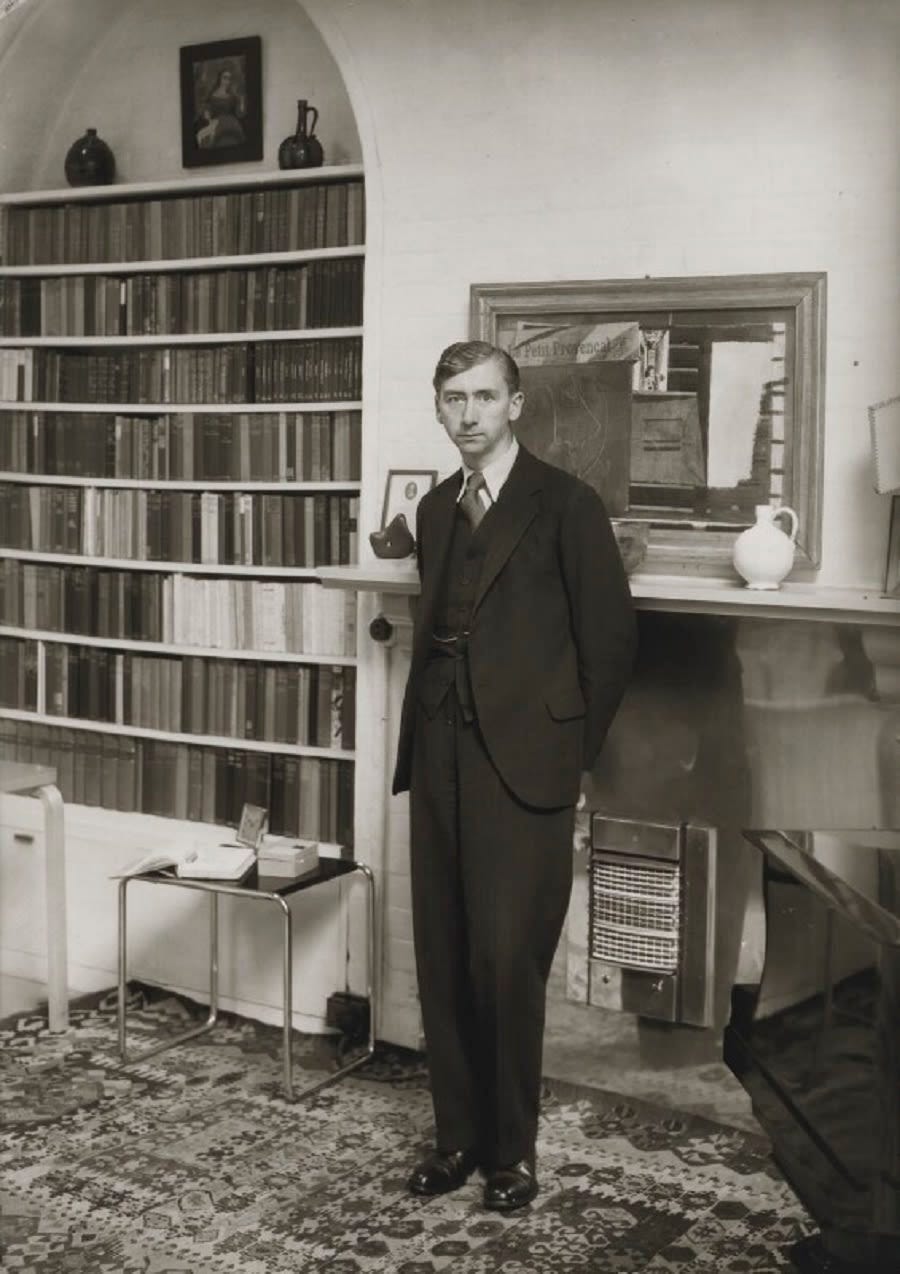
Herbert Read. Photographed by Howard Coster at No.3 The Mall, Parkhill Road, Hampstead, 1934. © National Portrait Gallery, London.
Above the mantelpiece is Ben Nicholson’s ‘Collage with Spanish Postcard’ 1933 and on it to Read’s right is Barbara Hepworth’s ‘Mother and Child’ 1934.
Herbert Read poet, art critic and champion of Modernism
Louis McNeice who lived in Canonbury Park but frequently a guest at Isobar dinners. Poet and BBC producer, contemporary of the spy Antony Blunt at Marlborough College. Close friend of W.H. Auden and of the poet and writer Geoffrey Grigson, who was husband of the food writer Jane Grigson and father of Sophie Grigson.
Paul Nash surrealist painter and WW1 War Artist - a protegé of Ben Nicholson, he lived in nearby Eldon Grove. His brother John Nash was the life long friend of the writer Ronald Blythe. John was at one time in love with Dora Carrington but later married her friend Dorothy Kühlenthal. Carrington had been a contemporary of Paul Nash at the Slade.
Sir Julian Huxley - scientist, conservationist and brother of Aldous Huxley
Ernst Freud - architect, son of Sigmund Freud and father of Lucien Freud
Raymond Postgate: Communist, writer and founder of The Good Food Guide. Father of Oliver Postgate, the creator of Noggin the Nog (my childhood favourite), The Clangers and Bagbuss.
Also living near to Lawn Road in the late 1930s were Piet Mondrian, Lee Miller who was a friend of Wells Coates, and her husband the artist and champion of surrealism Roland Penrose.
Many of the friendships formed at the Isobar lasted a lifetime.
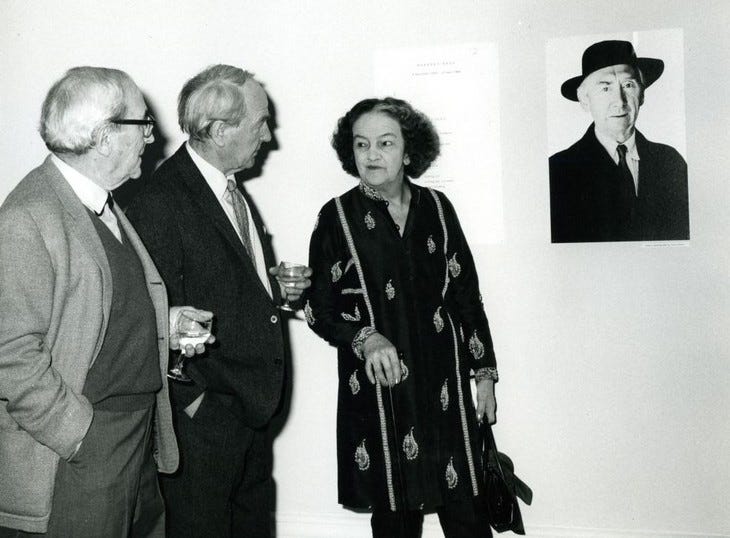
Naum Gabo, Henry Moore and Barbara Hepworth next to a portrait of Herbert Read at the Herbert Read Memorial exhibition at the Tate Gallery 1968. Tate Archive
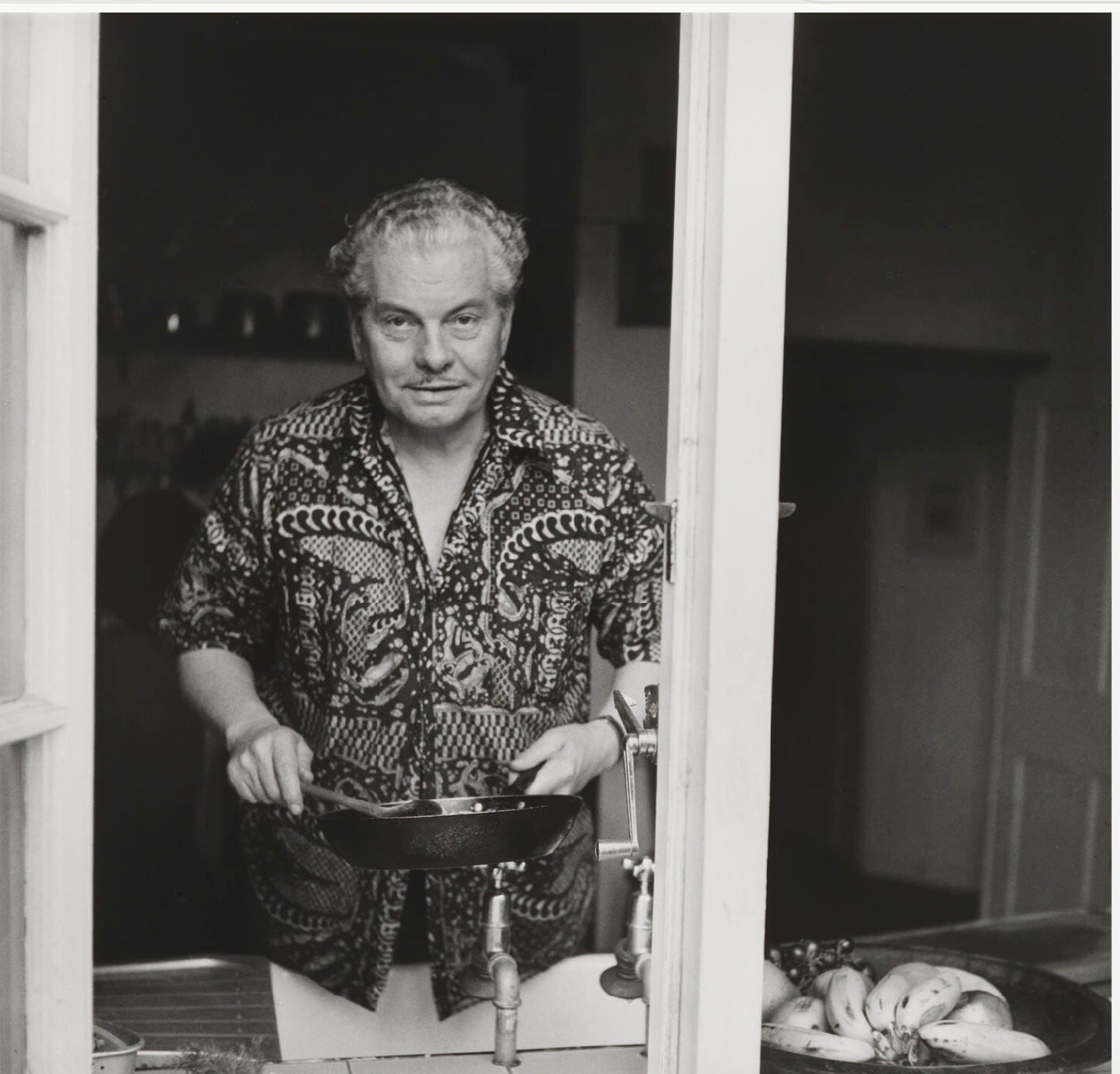
Wells Coates at Farley Farm in 1954. Photo by Lee Miller. Copyright the Lee Miller Archive.
FINALLY…
Philip Harben frequently devised and served fund-raising dinners in the Isobar, often for left wing causes such as the Spanish Civil War and the famine in China. The food was always themed to the cause - at the meal to support famine relief in China, diners were served a simple dish of boiled rice and vegetables such as Harben imagined a Chinese peasant might eat. The dinners were by invitation only and were attended by leading artists and politicians. At one such event in 1938 the veteran trade unionist Ben Tillett was a guest of honour.
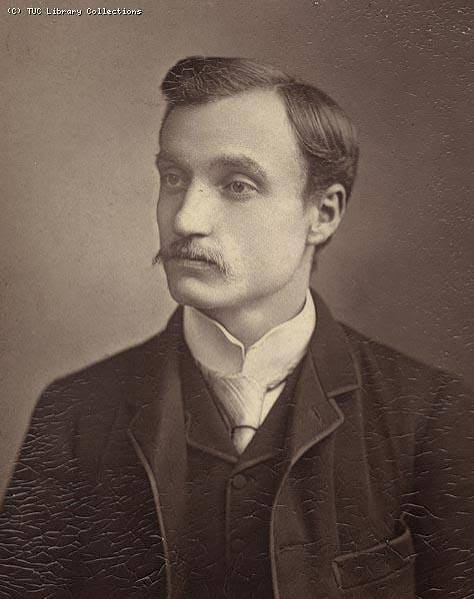
A young Ben Tillet - Trade Union Congress Library.
Ben Tillet had been involved in the disastrous Hull Dock Workers Strike in 1893 when he went to Hull to rally the dock workers. There he met my great-grandfather Jem Boughen who was a dockers’ union official. In July 1915 he revisited the Boughen family in Hull and dandled one of Jem’s baby grandchildren on his knee - my father James who was named after his grandfather.
Six degrees of separation indeed.
Notes
The tendrils and connections that lead out from the Isobar are almost infinite. I’ve had to be selective and I’ve chased down the rabbit holes of the connections that I am most interested in. There are of course many, many more.
This article about Crysède is a good introduction if you want to know more.
https://www.worldofinteriors.com/story/crysede-textile-manufacturer-cornwall-exhibition
Jack and Mollie Pritchard had a holiday home in Suffolk also called Isokon and designed for them by their daughter. If you want to channel your inner modernism the Isokabin in the grounds is available to rent.
https://www.isokon.uk/
There is a Philip Harben Award for Food in Action - part of the World Food Photography Competition. The photos are wonderful.
https://www.theguardian.com/artanddesign/gallery/2026/jun/03/world-food-photography-awards-2026-in-pictures
Apologies for the lack of recipe. Time ran away from me and I finished this article away from home.
Two books I used to research this article.
‘Isokon and the Bauhaus in Britain’ by Leyla Daybelge and Magnus Englund
‘The Lawn Road Flats: Spies, Writers and Artists’ by David Burke.
Phew! More in a a couple of weeks.
x Liz
Wow this is an excellent article about interconnections. Is the building still standing? It looks very modernist.
Farley Farm (Lee Miller's home after WW2) is only 10 minutes drive from where I live and is open to the public three or four days a week during the summer: https://www.farleyshouseandgallery.co.uk/
I only discovered this very recently following an article in The Times one Saturday, written by her son, and will be visiting soon!